

On the afternoon of May 14th, London time, the event “Golden Dialogue: Crafting Harmony between Cultures” was successfully concluded in London as part of the official series of events for the 2025 London Craft Week. Organized by the century-old heritage brand Lao Feng Xiang and co-hosted by Creative Dual Cities, the event brought together master artisans, leading figures in design education, and industry experts from China and the UK. Through keynote speeches, thematic discussions, and demonstrations of intangible cultural heritage skills, participants explored contemporary innovations and international development pathways for traditional craftsmanship.
Century-Old Craftsmanship Meets Global Creativity
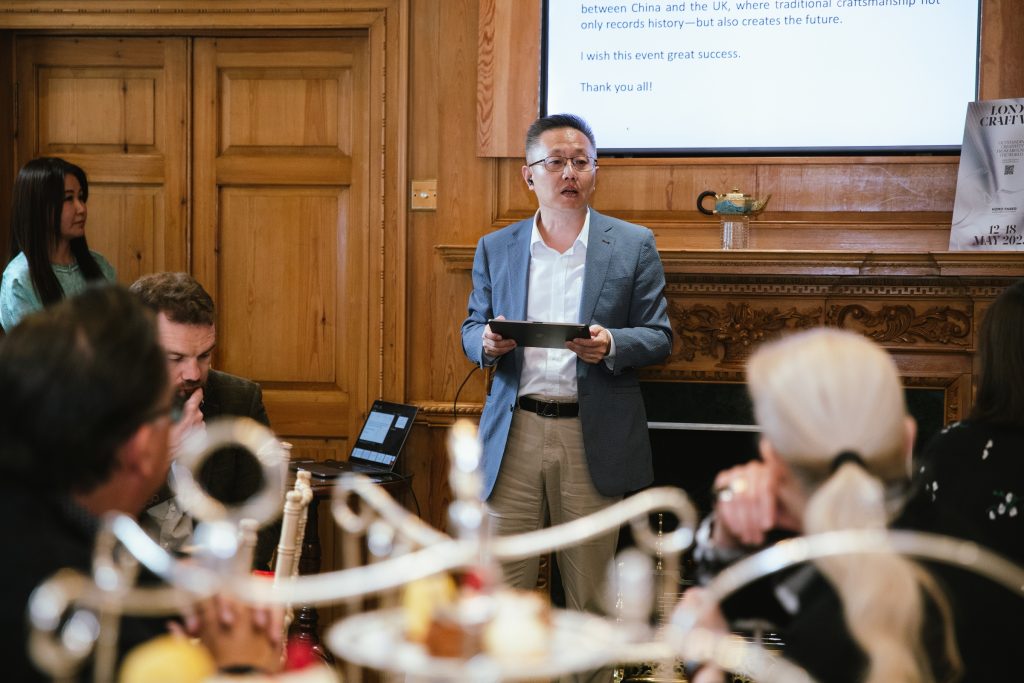
At the beginning of the event, Huang Hua, General Manager of Lao Feng Xiang Co., Ltd. and Shanghai Lao Feng Xiang Co., Ltd., stated in his opening speech that while the development paths of Chinese and Western craftsmanship differ, they share a common pursuit of excellence in artistry. He expressed hope that this event would foster a cross-disciplinary and cross-cultural collaborative network.
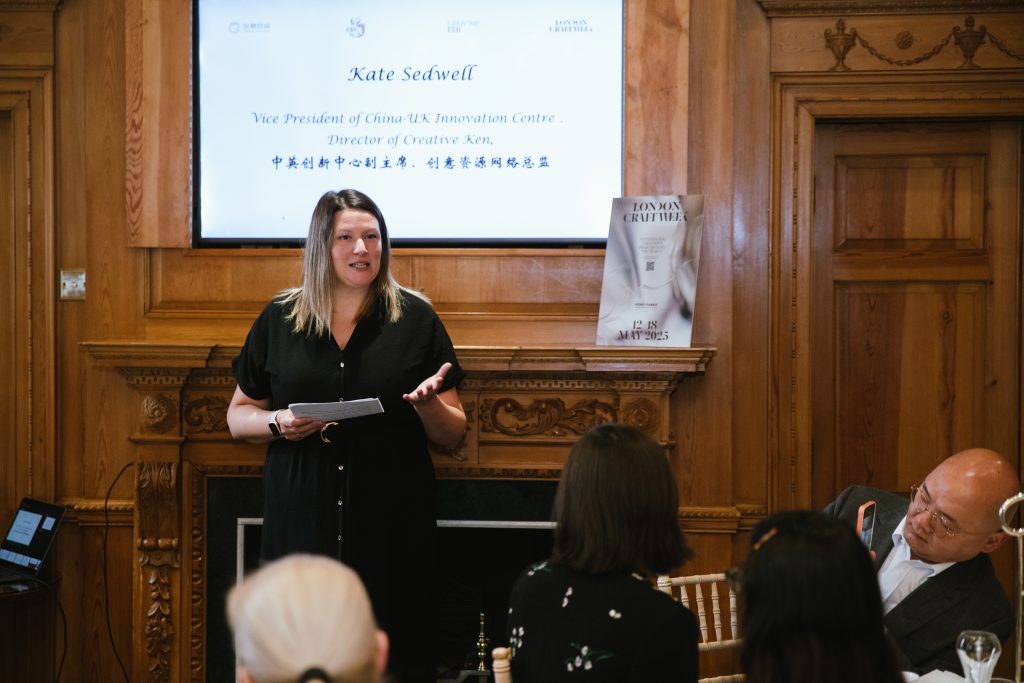
In her address, Kate Sedwell, Vice Chair of the Sino-British Innovation Centre and founder of the Creative Resource Network, responded by noting that the complementary nature of Chinese and British cultures will provide new momentum for the sustainable development of craftsmanship. She emphasized that when Eastern artisanship meets Western design thinking, it is bound to spark artistic resonance that transcends time and space.
From Heritage Preservation to Global Co-creation
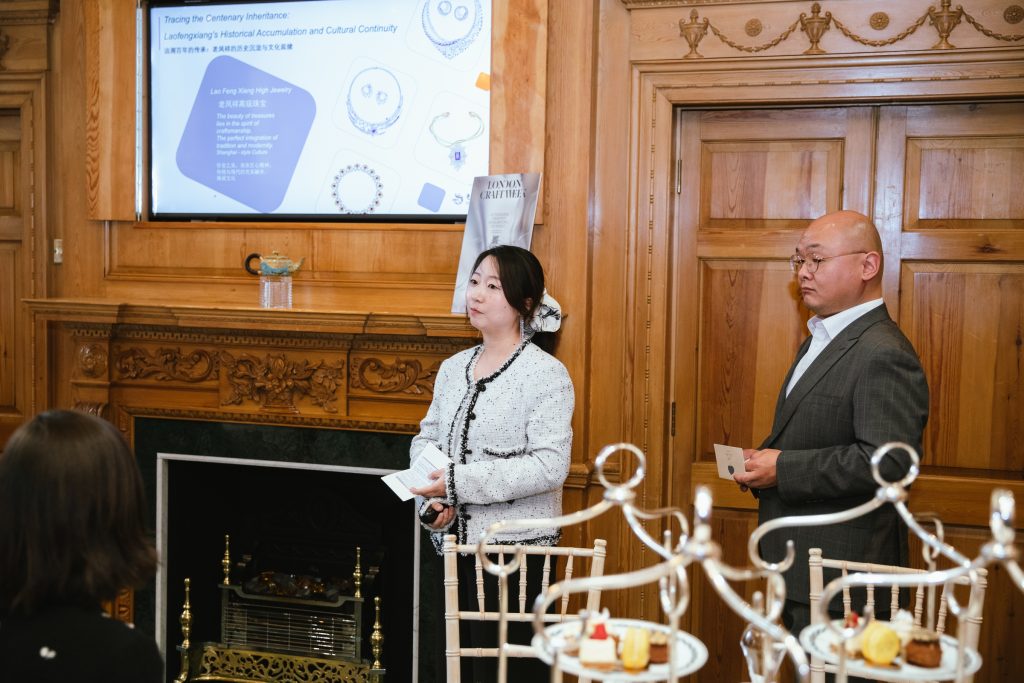
During the thematic sharing session, Zheng Peijia, Assistant Director of the Design Center at Shanghai Lao Feng Xiang Co., Ltd. and Senior Technician, and Yang Fangzhou, Design Supervisor at Shanghai Lao Feng Xiang Enamel Art Co., Ltd. and Intermediate Craft Artist, shared insights into the innovative journey of the brand’s century-old craftsmanship. From millimeter-level engraving in fine gold and silver work to the thousand-degree firing process of enamel glazing, the discussion centered on how traditional techniques are being revitalized through contemporary design, emerging as a key focus of the event.
Liz Olver and Jennifer Hall-Thompson, representatives of the UK jewelry incubation platform “Bright New Stars Program,” shared their experience in nurturing emerging designers. Their “incubation-exposure-empowerment” model offers an international benchmark for the industrialization of traditional craftsmanship.
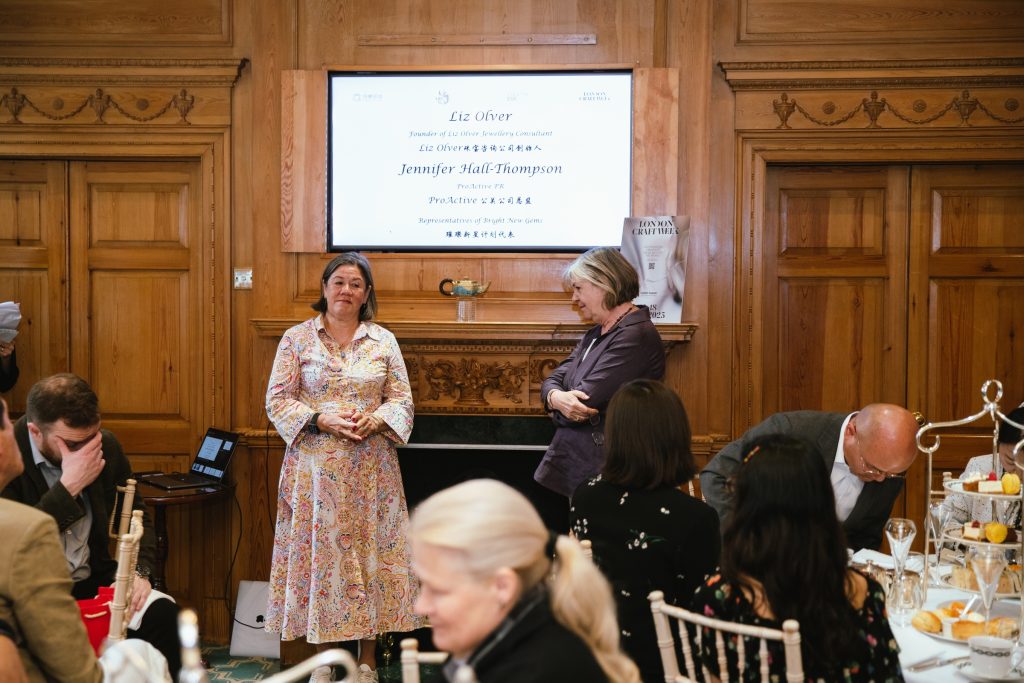
Simon Fraser, Course Director of the MA Ceramics, Furniture, and Jewelry Design program at Central Saint Martins, University of the Arts London, and Elizabeth Wright, Senior Lecturer in Design Practice and Field Research, presented on the theme of “Boundary-Breaking Innovation.” They proposed that “traditional craftsmanship is a supercode for building a sustainable future,” emphasizing the critical role of interdisciplinary collaboration in the transformation of craftsmanship.
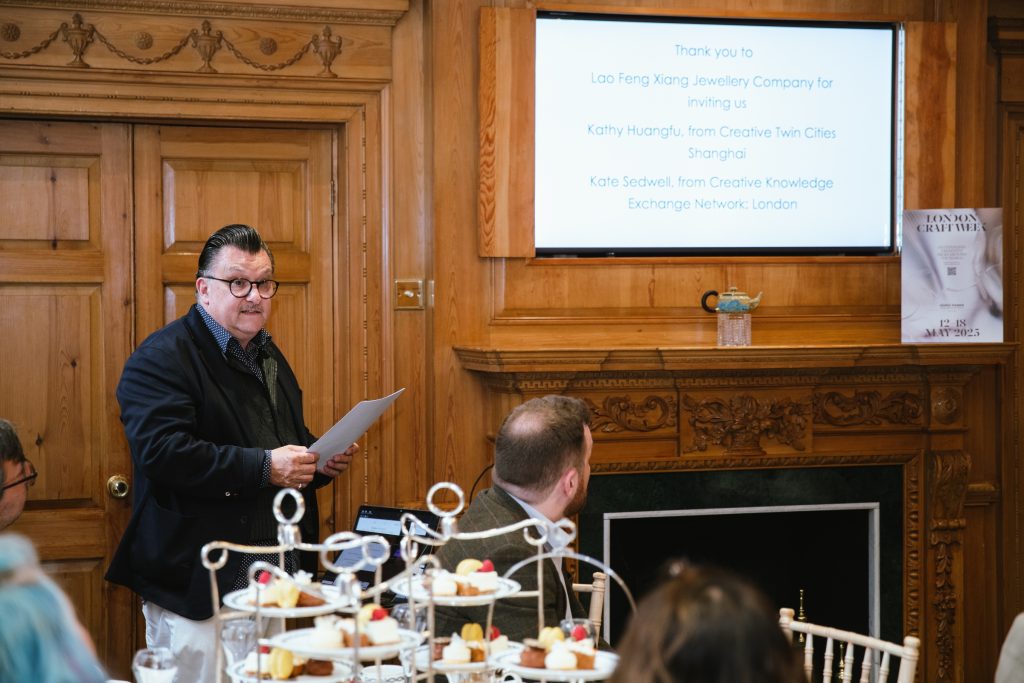
Two Major Collaboration Modules Launch a New East-West Milestone
1. Dialogue of Craftsmanship · Exchange Visits: Regularly organizing mutual visits between intangible cultural heritage inheritors and European master artisans to facilitate skill exchanges and thematic discussions.
2. Creative Integration · Product Collaboration: Inviting European designers to submit original works, which will be brought to life by Lao Feng Xiang’s top-tier team, promoting the tangible expression of Sino-European cultural integration.
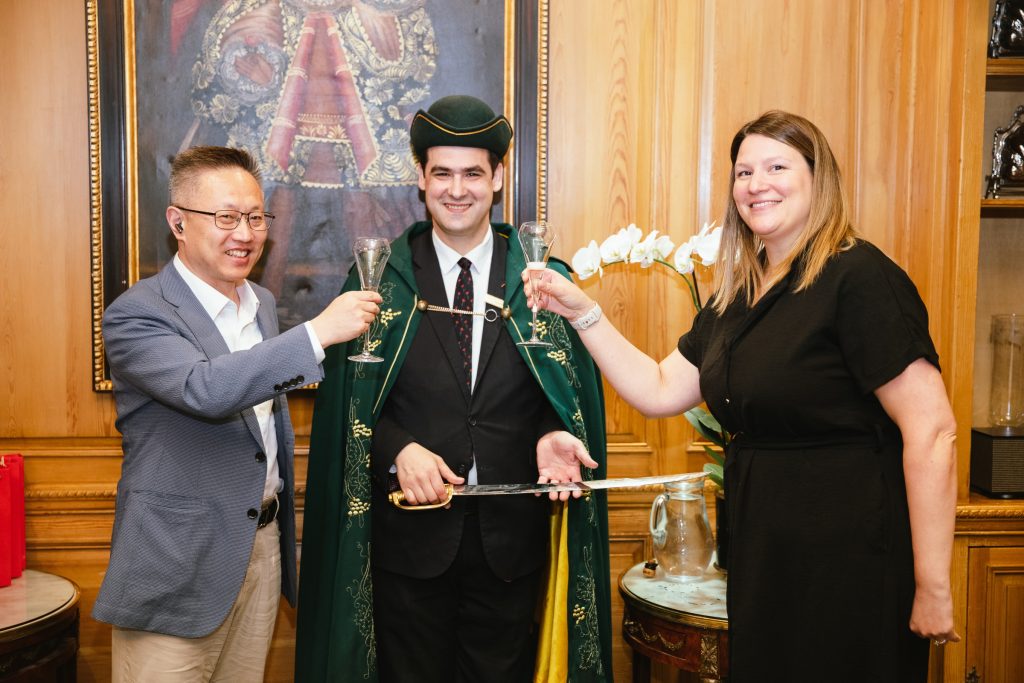
Amid the fragrant ambiance of an English afternoon tea, the dialogue between gilded metalwork and delicate paper-cutting became a vivid illustration of East-West cultural exchange.
Cross-Border Collaboration Shaping the Future of Craftsmanship
This event was not merely a showcase of craftsmanship but also marked a new phase in the international collaboration of traditional handicrafts. As General Manager Huang Hua stated, “Let cutting-edge British design and Chinese artisan philosophy inspire each other; when Eastern aesthetics and Western design empower one another, the inheritance and innovation of craftsmanship will undoubtedly advance with greater stability and vision.” In the future, both China and the UK will deepen their collaboration in fields such as education, design, and commerce, exploring diverse pathways for the dynamic preservation of cultural heritage.